The advantage of using the sound power level, rather than the sound pressure level, in reporting equipment noise is that the sound power is an inherent property of the equipment - it does not depend on the:
The sound power level (and not the sound pressure level) should be an essential part of modern technical specifications of any equipment that may cause environmental and/or occupational noise problems.
Traditionally, the sound power level has been determined by measurements of the sound pressure level of a piece of equipment that needs to be placed during these measurements:
Today , using state-of-the-art sound intensity technology, sound power level of your product or equipment that you use may be determined in-situ, in your laboratory or factory, without any special arrangements.
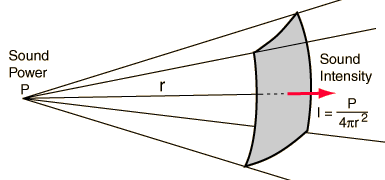
During sound intensity measurements your equipment may operate at any location.
Furthermore, sound intensity measurements eliminate steady extraneous background noise, which means that you do not need to stop other, nearby equipment during the measurements.
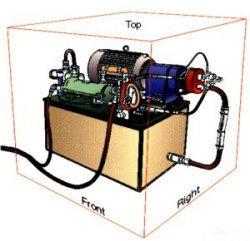 |
The measurements of sound intensity are carried out over a close, imaginary box (of any shape, e. g. a cuboid or rectangular parallelepiped, as in the diagram on the left) surrounding a piece of equipment operating in situ. Based on these measurements, the sound power level of the piece of equipment is determined by the sophisticated analyzer. |
We carry out sound intensity measurements with Brüel & Kjær (B&K) Modular Precision Real-Time Sound Analyzers type
2270, with Sound Intensity Probe type: 3595
with a Pair of Microphones type: 4197 (state-of-the-art hand-held sound intensity system).
Using this system, the sound power level may be determined according to:
| ISO 9614-1 : 1993 | ||||||||||||||
| ISO 9614-2 : 1996 | ||||||||||||||
|
|
||||||||||||||
| ANSI S12.12 - 1992 (R2017) | ||||||||||||||
| ECMA 160 Ed. 2 (1992) | ||||||||||||||

Measurements, assessments and control of noise and vibration since 1995.