With our comprehensive academic qualifications coupled with
extensive practical engineering experience and technical skills, and
with our all-inclusive, world-class, specialist measuring
equipment and software, we will find effective solutions to
essentially any noise problems.
Our services in measurements, assessment and control of environmental noise include:
environmental, interior and occupational noise
measurements and analyses with the latest technology,
factory-/NATA-calibrated, Class 1, world-renowned Brüel and Kjær (B&)
Modular Precision Real-Time Sound Analyzers types: 2250 and
2270;
overview, post-processing and in-depth analyzing of noise measurement data with Brüel & Kjær (B&K) software packages:
- Noise Explorer type 7815; and - Evaluator type 7820;
product noise rating compliance certification - determination of the
sound power level of a mechanical system on the spot,
in situ, in your laboratory or factory, without the necessity of placing this system inside the anechoic or
reverberant chambers (expensive) or in the acoustically free-field (in many cases unattainable);
assessment of occupational noise according to requirements of WorkCover Authority (WorkCover), i.e.
- Work Health and Safety Regulation 2011; and
- Australian/New Zealand Standard: Occupational noise management (AS/NZS 1269: 2005);
assessment of noise from child care centers;
selection of optimal noise reduction methods;
design of noise barriers, enclosures and silencers;
redesign recommendations for the silencing of noisy machinery and processes;
recommendations on modifications of both industrial buildings
accommodating noisy equipment and residential buildings exposed to excessive
noise;
certification of compliance with Australian Design Rules:
- ADR 28/01 : External Noise of Motor Vehicles;
- ADR 39/00 : External Noise of Motor Cycles; and
- ADR 56/00 : Moped Noise;
MOST ADVANCED, VERY USEFUL BUT RARELY AVAILABLE measurements of
the sound intensity with state-of-the-art hand-held sound intensity system;
and
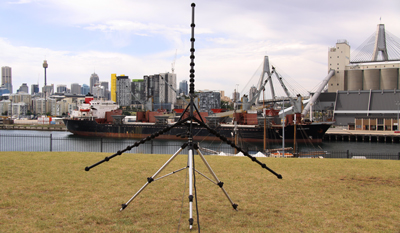
identification of sources of noise with acoustic cameras, as on the
photograph below:


Measurements, assessments and control of noise and vibration since 1995.